Your Brain on Empty: The Hidden Power of Doing Absolutely Nothing

Photo: Shixart1985, CC BY 2.0, via Wikimedia Commons
Here's something that might mess with your head a little: the most productive thing you did this week might have been the afternoon you spent doing absolutely nothing.
We know, we know. That sounds like something printed on a novelty mug. But stick with us, because the neuroscience behind this idea is genuinely fascinating — and it has real implications for how you work, create, and live.
The Cult of Constant Doing
American culture has a complicated relationship with rest. We wear busyness like a badge of honor. We side-hustle on weekends, optimize our lunch breaks, and feel vaguely guilty whenever we're not producing something. Even our vacations get packed with itineraries. The idea of sitting quietly without a podcast, a task, or a goal feels almost radical.
But here's the thing — that relentless forward motion comes at a cost. And it's not just burnout or stress (though those are very real). The cost is cognitive. When you never let your mind go truly idle, you're actually cutting yourself off from some of your brain's most important work.
What Your Brain Does When You're "Not Doing Anything"
Neuroscientists have been studying a fascinating network of brain regions called the default mode network, or DMN. For a long time, researchers thought this network was just background noise — the brain idling like a car at a stoplight. But it turns out the DMN is anything but inactive.
When you stop focusing on a specific task, your default mode network lights up. And what it does in that space is remarkable. It processes memories, makes unexpected connections between ideas, works through unresolved emotional experiences, and generates creative insights. Basically, your brain uses downtime to do all the deep, integrative work it can't squeeze in while you're answering emails or sitting through a Zoom call.
Ever noticed how your best ideas tend to show up in the shower? Or on a long drive? Or right before you fall asleep? That's your DMN doing its thing. You stepped back, stopped forcing it, and your brain finally had room to breathe.
The Problem With "Productive Rest"
Here's where it gets a little tricky. Even the wellness industry — bless its heart — has found a way to optimize rest into just another performance metric. We've got sleep trackers, meditation streaks, recovery scores, and apps that grade the quality of your downtime.
And while tools like that can be genuinely helpful, they can also quietly undermine the very thing you're trying to achieve. If you're checking your HRV score every morning and stressing about whether your recovery was "efficient enough," you're not really resting. You've just turned relaxation into another task to nail.
True idleness — the kind that actually activates your default mode network — requires a certain surrender. It's unstructured, unmeasured, and honestly a little uncomfortable at first if you're not used to it.
Reclaiming Genuine Downtime in the Age of Optimization
So how do you actually do this? How do you give yourself permission to be genuinely unproductive in a culture that treats stillness like a character flaw?
Start small and make it physical. You don't need to block off a full Saturday. Even 15–20 minutes of genuine idle time — no phone, no podcast, no agenda — can give your DMN a chance to activate. Sit on your back deck. Take a slow walk without earbuds. Lie on the couch and watch the light change. The goal is zero input and zero output.
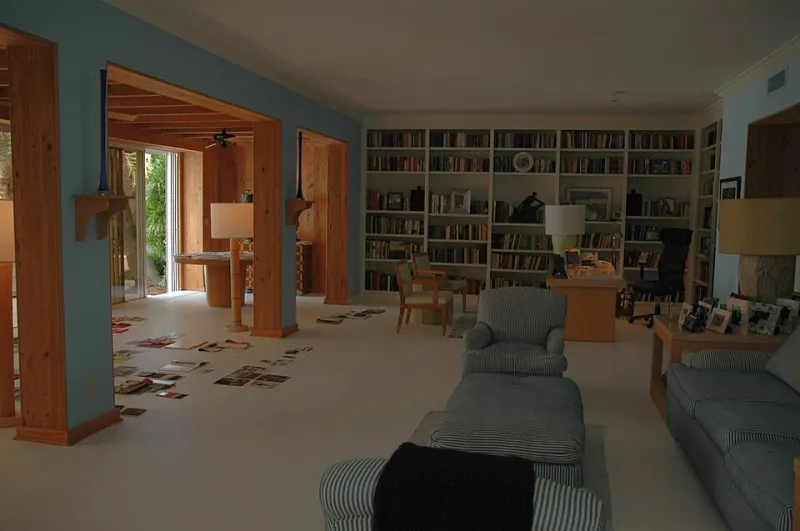
Create a low-stimulation environment. Your surroundings matter more than you think. A cluttered, loud space keeps your brain in reactive mode. A calm, comfortable environment — think soft lighting, a cozy chair, maybe a candle or two — signals to your nervous system that it's safe to downshift. This is exactly why investing in your home relaxation setup isn't frivolous; it's functional.
Ditch the guilt ritual. A lot of Americans struggle less with finding time to rest and more with allowing themselves to actually use it. If you catch yourself mentally cataloging everything you should be doing while you're trying to unwind, that's worth paying attention to. Rest isn't a reward you earn after you've completed everything. It's a non-negotiable part of how your brain functions well.
Let boredom happen. This one's counterintuitive in the best way. Boredom gets a terrible reputation, but researchers have found it's actually a powerful creative catalyst. When your brain isn't being fed a constant stream of stimulation, it starts generating its own. That restless, slightly uncomfortable feeling of having nothing to do? That's often the precursor to your most original thinking.
The Relaxation Paradox, Unpacked
Here's the core of it: we've been taught to think of rest and productivity as opposites sitting on a seesaw. More of one means less of the other. But that's just not how the brain works.
Rest is productivity — just a different, deeper kind. It's the kind that doesn't show up on a to-do list but absolutely shows up in the quality of your ideas, your problem-solving, your emotional resilience, and your ability to actually enjoy your life.
The people who seem endlessly creative and sharp aren't just working harder. Many of them are also resting more intentionally. They've figured out — sometimes accidentally, sometimes deliberately — that empty time isn't wasted time. It's investment time.
Building It Into Your Life
At Relxx Shop, we talk a lot about building a life that includes genuine rest — not as a luxury, but as a baseline. That means thinking about your environment, your routines, and the small choices you make every day that either support or undermine your ability to truly unwind.
Maybe that looks like a dedicated wind-down corner in your living room. Maybe it's a Sunday afternoon with no plans and no guilt. Maybe it's finally putting your phone in another room for an hour and seeing what your mind does with the quiet.
Whatever shape it takes for you, the point is the same: your brain needs empty space the way your lungs need air. Stop filling every moment, and you might be surprised what starts to surface.
The most productive skill you can develop right now might just be learning how to do nothing — and doing it well.