Watching Wellness Won't Make You Well: The Trap of Consuming Rest Instead of Taking It

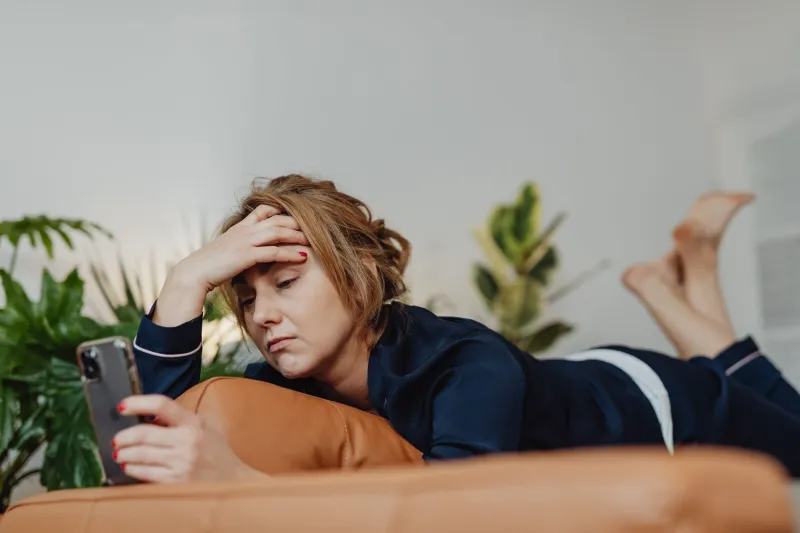
Picture a Tuesday night. You're on the couch, phone in hand, watching a 12-minute YouTube video on the benefits of progressive muscle relaxation. Then a TikTok on the best chamomile blends for sleep. Then a Reddit thread about whether white noise machines are worth it. An hour disappears. You feel vaguely informed — maybe even a little virtuous — and then you realize you haven't actually relaxed at all.
Welcome to the wellness consumption loop. It's one of the sneakiest productivity traps of the modern age, and it's dressed up in the language of self-care.
The Illusion of Doing Something
There's a psychological concept called vicarious fulfillment — the brain's tendency to register the idea of completing something as a partial reward, even when you haven't done the thing itself. Researchers have found this applies to everything from fitness goals to grocery shopping. When you spend 45 minutes reading about cold plunges, your brain gets a small hit of satisfaction, as if you'd actually taken one.
Wellness content is particularly good at triggering this effect. It's aspirational. It feels productive. It uses calm colors, soothing music, and reassuring voices. The experience of watching a guided meditation is genuinely more pleasant than staring at your ceiling. But it's not the same as meditating — not even close.
Your nervous system doesn't care how much you know about parasympathetic breathing. It cares whether you actually did it.
Why the Algorithm Isn't Your Wellness Coach
Here's something the platforms won't tell you: the content that performs best in wellness categories is optimized for engagement, not relaxation. That means it's designed to keep you watching. Cliffhanger structures. "Wait until the end" hooks. "Part 2" promises. A genuinely relaxing video would put you to sleep — which is great for your health and terrible for watch-time metrics.
So the very medium delivering wellness content is structurally opposed to the outcome it claims to support. You can follow 200 accounts about mindfulness and still be chronically overstimulated, because the act of following, scrolling, and consuming is itself a form of low-grade cognitive load.
Your brain is working the whole time. It's processing, comparing, bookmarking, evaluating. That's the opposite of rest.
The Knowledge-Action Gap in Self-Care
Studies on behavior change consistently show that information alone almost never produces action. If knowledge were enough, every doctor would be in perfect health. Every personal finance writer would be debt-free. Every wellness creator would be a monk.
The gap between knowing what to do and actually doing it is especially wide when the "doing" feels uncomfortable or boring. And real rest — actual, unstructured, low-stimulation downtime — can feel deeply uncomfortable for people who've spent years filling every gap with content.
So we reach for more content. More tips. More inspiration. More "inspo" to finally start the thing we already know we should be doing. It's a loop that feeds on itself.
Practical Ways to Break the Cycle
Set a consumption cap. Give yourself 10 minutes of wellness content per day, max. Treat it like a supplement, not a meal. One article, one video, one podcast episode — then close the app and do the thing.
Replace the scroll with a prop. Having a physical object associated with your wind-down routine — a specific candle, a weighted blanket, a particular tea mug — helps your brain shift modes without needing a screen to guide it. The transition becomes tactile, not digital.
Schedule the practice, not the research. Block 20 minutes on your calendar labeled "actual rest" — not "read about rest" or "find a good meditation app." Show up to that block with nothing to learn. Just be there.
Notice the substitute feeling. When you catch yourself about to open a wellness app instead of doing the thing, pause. Ask: am I about to rest, or am I about to watch someone else talk about resting? The awareness alone can interrupt the loop.
Lower the bar dramatically. One of the reasons people stay stuck in consumption mode is that they're waiting to do rest "right." But five minutes of sitting quietly on your porch beats 45 minutes of watching breathwork tutorials. Imperfect rest beats perfect content every time.
What Real Rest Actually Looks Like
It doesn't look like much. That's the whole point.
Real rest might be sitting in your backyard without your phone. It might be a slow walk where you're not listening to anything. It might be lying on your bed staring at the ceiling for ten minutes before dinner. It might be doing a puzzle or knitting or just watching the light change through the window.
None of it is photogenic. None of it would get engagement. But your nervous system doesn't need engagement — it needs the absence of it.
At Relxx Shop, we think about this a lot. The products we love most aren't the ones that promise transformation through more input. They're the ones that help create conditions for genuine stillness — a better reading lamp, a softer throw, a diffuser that fills a room with something calming rather than something stimulating. Tools that support the practice, not replace it.
The Permission You've Been Looking For
Here's the thing nobody in the wellness content space is incentivized to tell you: you already know enough. You don't need one more article (after this one, obviously) or one more breathwork explainer or one more thread about magnesium glycinate.
You need to put the phone down.
Not because you've failed at wellness — but because you've been consuming it when you should have been living it. The research is done. The tips are bookmarked. The apps are downloaded.
Now rest.
Actually rest. Tonight. For real this time.