Your Chill Zone Is a Health Investment: Here's the Science to Prove It
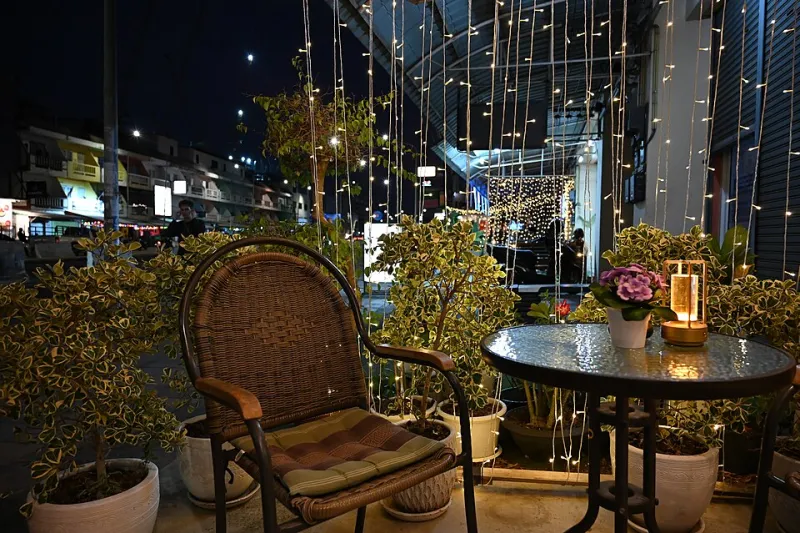
Photo: PattayaPatrol, CC BY-SA 4.0, via Wikimedia Commons
Let's be honest: most of us have a spot in our home with good intentions and zero follow-through. Maybe it's a chair by the window that got buried under laundry. A backyard corner that never quite became the retreat you pictured. Or a bathroom that's functional but about as relaxing as a gas station restroom.
Here's the thing — that half-finished vision you keep putting off? It's not a luxury project. It's a health decision you haven't made yet.
Creating a dedicated space for rest and recovery isn't about aesthetics or keeping up with whatever's trending on home décor feeds. It's about giving your nervous system a reliable place to land. And the research on this is surprisingly compelling.
What Your Brain Does When It Walks Into a Room
Your brain is constantly scanning your environment and making predictions. It's asking: Is this a place where I need to be alert? Or can I stand down?
This happens largely through a process called contextual conditioning — essentially, your nervous system learns to associate specific environments with specific states. Think about how differently you feel walking into a hospital versus a spa. Same basic building, wildly different internal response. That's not just mood. That's your autonomic nervous system reading cues and adjusting accordingly.
Research published in the Journal of Environmental Psychology has shown that cluttered, chaotic spaces are correlated with elevated cortisol — the stress hormone your body releases when it thinks something demands your attention. Conversely, environments characterized by low visual noise, soft textures, warm lighting, and natural elements tend to activate the parasympathetic nervous system — the "rest and digest" branch that counterbalances your fight-or-flight response.
In plain terms: the room you're in right now is either helping or hurting your ability to decompress. And most American homes are accidentally designed to keep us slightly on edge.
The Real Cost of Not Having a Dedicated Space
Here's where it gets practical. Chronic stress isn't just an emotional inconvenience — it's a physiological burden with measurable health consequences. Persistently elevated cortisol is linked to disrupted sleep, weight gain, weakened immune function, cardiovascular stress, and cognitive decline over time.
When you don't have a space that signals safety and rest to your body, you end up trying to decompress in environments that are also associated with work, chores, obligations, or stimulation. Your bedroom becomes a second office. Your couch becomes where you doom-scroll. Your bath time turns into a 10-minute efficiency drill.
Your body never fully gets the memo that it's okay to relax — because the environment never sends that message clearly.
Building even a modest dedicated relaxation space interrupts that pattern. It creates a consistent neurological cue: this is where we slow down. Over time, the association deepens. You walk in, and your body starts to exhale before you even sit down.
You Don't Need a Renovation Budget
This is the part where people tend to check out, assuming this is advice for people with spare rooms and disposable income. It's not.
A relaxation zone can be:
- A single armchair in a low-traffic corner of your bedroom, paired with a small side table, a warm lamp, and a blanket you actually like the feel of
- A backyard chair setup with a few string lights and a small outdoor rug — even a 6x6 foot space can feel like a different world with the right framing
- A bathroom ritual upgrade that costs less than a gym membership — think a decent bath pillow, an essential oil diffuser, and a few candles you reserve specifically for wind-down time
- A balcony or porch corner with a comfortable seat and something that blocks visual noise from the street
The research on restorative environments doesn't require square footage. It requires intentionality. The key factors are sensory consistency (the same smells, lighting, and textures every time), low stimulation, and a clear separation from productivity-associated spaces.
The Sensory Details That Do the Heavy Lifting
If you want to get specific about what actually moves the needle neurologically, here's what the research points to:
Lighting: Harsh overhead lighting keeps your body in daytime mode. Warm, dimmable light — especially in the amber spectrum — signals the brain to begin melatonin production and ease into a lower-alert state. This one change alone has measurable effects on evening cortisol levels.
Scent: The olfactory system has a direct line to the limbic system, the part of your brain that governs emotion and stress response. Lavender, cedarwood, and chamomile have documented calming effects in peer-reviewed studies. A simple diffuser or a candle you light only during downtime starts to function like a Pavlovian trigger for relaxation over time.
Texture: Soft, weighted, or tactilely pleasant materials — a quality throw blanket, a supportive cushion, even a plush rug underfoot — activate sensory pathways associated with safety and comfort. Weighted blankets in particular have shown real promise in reducing anxiety markers.
Sound: Ambient noise or deliberate quiet matters more than most people realize. If your relaxation spot is acoustically exposed to TV noise, street traffic, or household chaos, your nervous system stays on low-level alert. Even basic white noise or a small sound machine can create a meaningful acoustic boundary.
Visual simplicity: You don't need to go full minimalist, but reducing visual clutter in your designated space lowers cognitive load. When your eyes don't have to process a pile of unopened mail or a stack of things you need to deal with, your brain gets to actually rest.
The ROI You're Not Calculating
Americans spend billions annually on sleep aids, stress supplements, mental health apps, and productivity tools — often trying to fix problems that a better environment could prevent in the first place. The average American spends around $450 a year on stress-related health products according to consumer wellness surveys.
A well-considered relaxation corner — built thoughtfully over time, not all at once — might run you $150 to $400 total. A decent lamp, a comfortable seat or cushion, a few sensory elements, and something that makes the space feel distinct from the rest of your home. That's a one-time investment with compounding returns: better sleep, lower baseline stress, more genuine recovery time, and the kind of mental reset that makes everything else in your life function better.
It's not about creating a magazine-worthy space. It's about giving your nervous system a home base — a place that reliably tells your body the workday is over and it's safe to let go.
Start Small, But Actually Start
The biggest mistake people make with relaxation spaces is treating them as an eventual project — something they'll do when they have more time, more money, or a bigger place. But your nervous system needs a landing zone right now, not in some hypothetical future with better furniture.
Pick one corner. One chair. One spot that can be yours. Add one sensory element this week. Build from there.
Your future self — the one who sleeps better, handles stress with more ease, and actually feels restored after a weekend — will consider it money very well spent.